Wandering
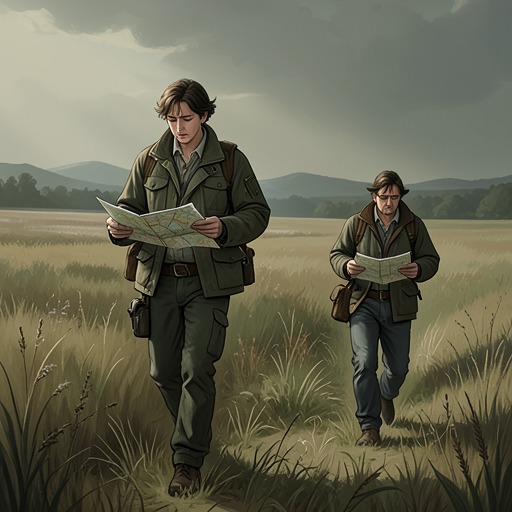
All the Bright PlacesWandering is the map-guided journey Theodore Finch and Violet Markey make through Indiana, a project that transforms local oddities, landscapes, and private stops into a shared geography of discovery. It begins as an invitation to look beyond the familiar, grows into a practice of making places meaningful together, and survives Finch’s disappearance as a route Violet can continue on her own. Its final measure is not a collection of souvenirs, but the impressions and memories the journeys leave behind.
A project of attention
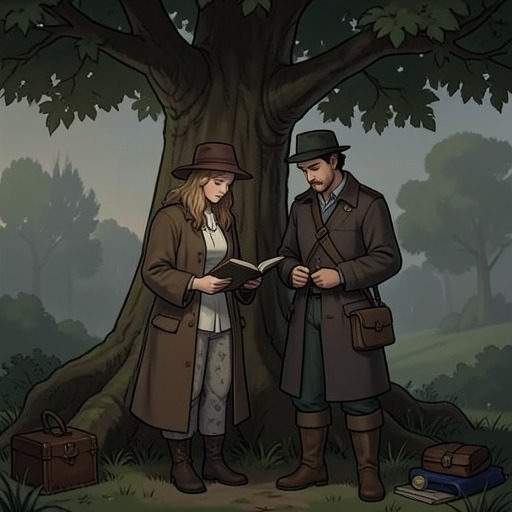
The wanderings give Finch and Violet a reason to go somewhere without treating the destination as the whole point. Their first high point is Hoosier Hill, marked by a wooden stake among stones and a sign identifying it as Indiana’s high point at 1,257 feet. The small, unassuming marker is a deliberate contrast with the grand idea of reaching a state summit. Violet finds the place underwhelming, but the experience establishes an important rule of the project: discovery does not require a spectacular destination. Paying attention to where they are, and to each other, can matter more than the scale of the attraction.
The project also turns familiar territory into something strange enough to explore anew. At Bookmobile Park, just outside Bartlett, seven book trailers of different makes, models, and years stand in a line amid cornfields. Violet recognizes a connection to a family ritual from California, when she, Eleanor, and their parents would hunt through bookstores until they found a chosen set of books. The journey therefore carries more than novelty: a new shared outing touches an earlier family memory, allowing Violet to bring part of her past into her growing relationship with Finch.
Their destinations do not have to be famous landmarks. They visit unusual sites across the state, including the Painted Rainbow Bridge, the Periodic Table Display, the Seven Pillars, Empire Quarry, and the Indiana Moon Tree. At Kokomo, they listen for a hum in the air; at Gravity Hill, Little Bastard rolls uphill in neutral. A winter blizzard briefly narrows what they can do outdoors, but the two make a giant snowman at Violet’s house and decide it can become a destination for other wanderers. Even an improvised object can enter the map’s spirit: a place becomes part of the project when someone attends to it and shares it.
Places made shared
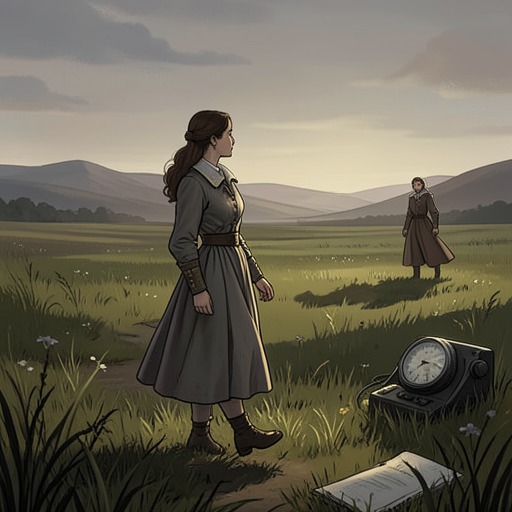
Wandering’s emotional geography develops through repeated acts of looking. Near the high school, Finch sometimes goes to sit or swim, and he has been watching a bird he feared might be hurt. When Violet sees it wade and splash in the shallows, Finch corrects her assumption that it is lost: the bird is wandering. The moment makes the project’s name more than a label for their excursions. Wandering can mean movement without a fixed destination, an activity that is not necessarily evidence of failure or distress.
At the Purina Tower, the pair climb the steel ladder and settle together beneath the tower’s year-round Christmas tree. Below them, white lights and dark patches of trees make the town resemble a field of stars. Violet calls the view lovely; Finch takes up the word and treats the town as something that belongs to them in that moment. The place has not changed, but the experience of seeing it together gives it a private meaning. Across the journey, physical locations become repositories for shared attention rather than interchangeable entries on a tourist itinerary.
That intimacy also shapes what the pair leave behind. At the Blue Flash, their last outing together, Violet attaches a small magnetized tin beneath the ride. Inside are a miniature toy car representing Little Bastard and two dollhouse figures, a boy and a girl, tucked into an empty cigarette pack. The tiny arrangement makes their relationship part of the place without turning the visit into a public monument. Violet calls it their last wandering; Finch is uncertain that the project is complete and considers choosing a backup destination rather than treating the outing as a definitive ending.
The route after Finch
Once Finch has been gone for some time, the map changes from a plan for two people into a task Violet must decide whether to carry forward. She buys another map so she can finish the project, even though she cannot yet make sense of what the pair saw and did or how to assemble it into something comprehensible to anyone else. The places survive in memory, a few photographs, and their notebook, but those records do not restore Finch or settle what the journey meant.
Violet later finds the map in her bag and sees that five places remain circled, with numbers Finch has written beside them to establish an order. The numbers give her a practical path through the unfinished project, while also making the absent partner’s planning visible. She goes on to complete wanderings without him. By the time only one destination remains, she hesitates to go: finishing would mean there was no further place left to find from Finch, and the evidence of his independent visits has not answered the questions his absence leaves behind.
The last point leads Violet to Farmersburg, fifteen miles from Prairieton and the Blue Hole. Finch’s final text to her refers to a lake, a prayer, and loveliness in private. Violet follows the roads until she finds Taylor Prayer Chapel, a small white chapel beside a lake. The map has brought her to a place Finch knew, but it cannot tell her when he came or what he experienced there. The location offers a concrete trace of his route without making his final movements fully knowable.
What the wanderings leave
Violet’s solo visits do not erase the difference between traveling with Finch and retracing his route after his disappearance. The first journeys produced shared experiences; the later ones are also acts of grief, undertaken with incomplete knowledge and a map whose numbered instructions are both practical and intimate. The project persists, but its meaning changes as Violet becomes the person who has to carry it forward.
Wandering also helps Violet imagine a future form for what she and Finch made. While awake after a late conversation, she sketches ideas for Germ, including a Wander section where readers could send pictures or videos of places they find grand, small, bizarre, poetic, or simply unusual. The proposal extends the project beyond the couple: attention to place can be shared with other people, not only held as a private memory. It connects the map’s personal discoveries to Violet’s effort to create something of her own.
By the time she reaches Taylor Prayer Chapel and reads what Finch left there, Violet no longer needs the wanderings to have produced a film, a set of souvenirs, or a finished account that makes sense to anyone else. She accepts that the value of the journey is not what the travelers take away, but what they leave. The map’s deepest significance is therefore not that it preserves every destination or resolves Finch’s disappearance. It gives Violet a way to encounter the places they shared, to continue without him, and to recognize that the experience has already altered what remains.